Do this first
- 01Inspect enemy positions and hazards before moving.
- 02Spend movement, action and bonus action as separate resources.
- 03Give the party a durable front line, recovery, control and reliable damage.
- 04Explore vertically and use the environment before forcing a fight.
- 05Short or long rest when spell slots and class resources are depleted.
Read the whole turn before acting
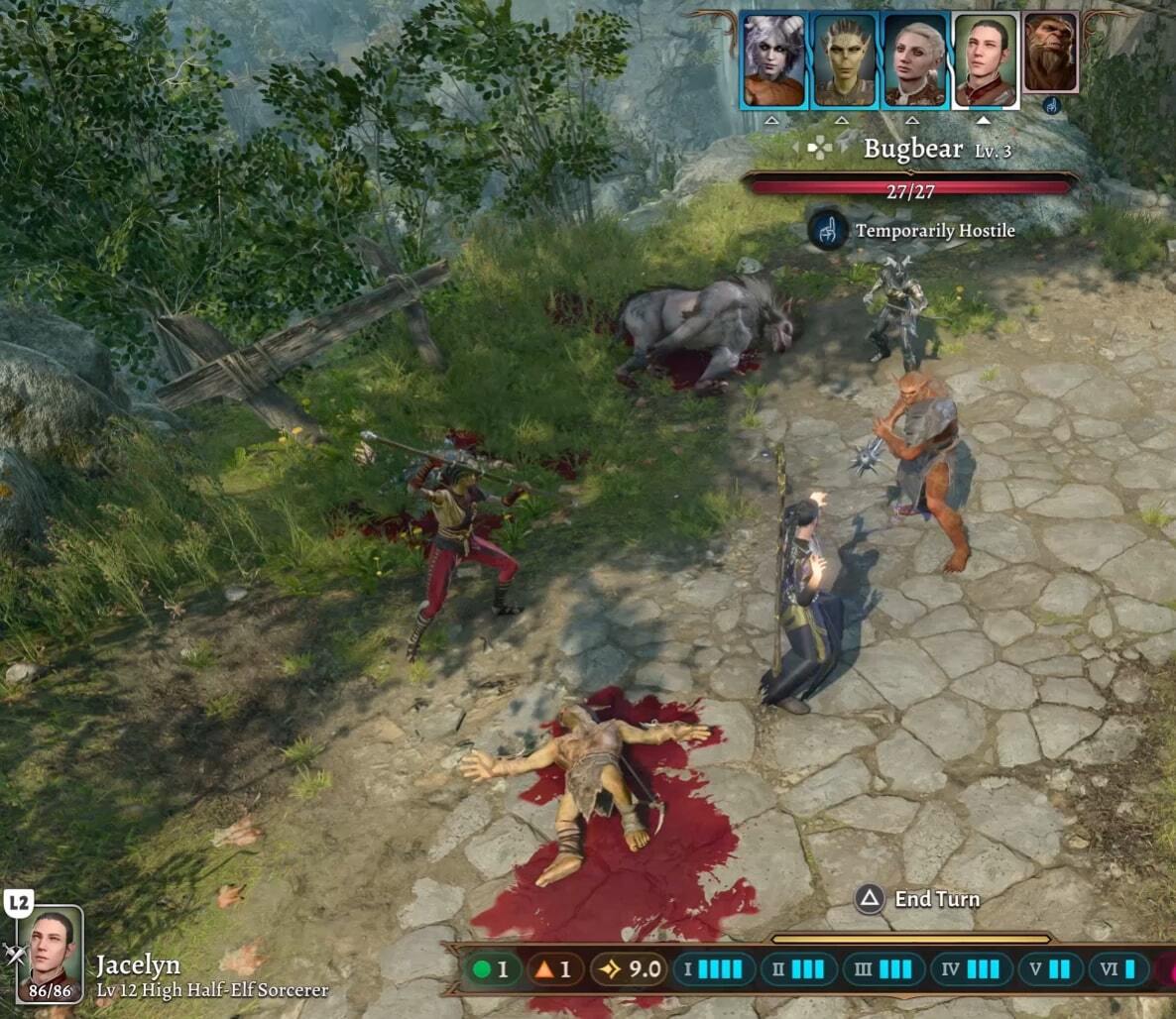
Baldur's Gate 3 uses turn-based D&D combat. Select a character, inspect reachable positions and visible threats, then decide which resource should solve the turn.
Moving first can improve range or cover, but it can also remove the safest exit. Preview the route and action before confirming either.
Build coverage, not four copies
The official game supports parties of up to four. A useful opening party covers durability, recovery, control and dependable damage rather than forcing every character into the same job.
- Keep one character able to survive contact.
- Keep at least one recovery option available.
- Carry both single-target and area answers.
- Use exploration skills outside combat instead of judging everyone only by damage.

Rest before resources collapse
Health is only one limit. Spell slots, class features and short-rest actions determine whether the party can answer the next encounter.
A short rest restores only what its tooltip names. A long rest advances camp state, so review open conversations before using it blindly.
Failure diagnosis
If the party loses before acting, approach from another angle and separate characters before combat. If attacks repeatedly miss, inspect range, height, lighting and advantage conditions instead of repeating the same roll. If a conversation creates an unwanted permanent branch, reload only if that fits the way you want to play; the game is designed to preserve consequences.