
Direct answer
For a reliable Survival start, gather wood and food before sunset, craft stone tools, light or seal a small shelter, and place a bed as soon as wool is available. Then build outward in this order: shield and iron tools, organized storage, renewable food, a safe mine entrance, and a clearly marked return route. The goal is not to rush the End; it is to make every death and expedition recoverable.
Evidence boundary: Minecraft worlds and loot vary. The sequence below uses stable official systems and deliberately avoids seed-specific coordinates, guaranteed structures or a claimed universal best route.
Do this first
- 01Collect logs, convert only what you need, and make a crafting table plus wooden pickaxe.
- 02Upgrade to stone tools, secure food, and stop long exploration before the first sunset.
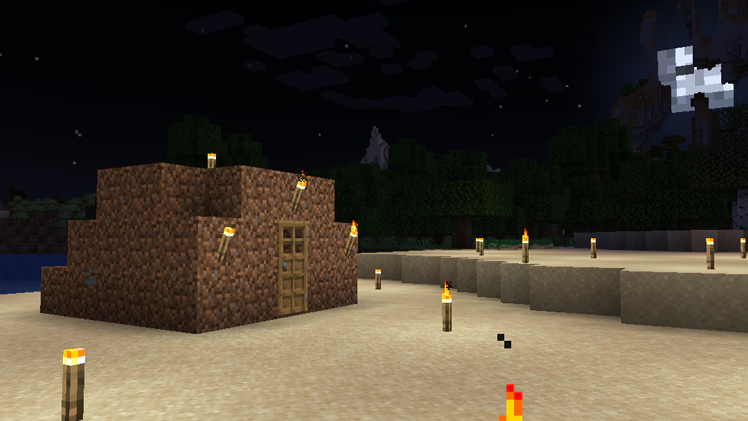
- 03Use torches or a sealed dirt, wood or stone shelter; keep one exit you can check safely.
- 04Make a bed when possible so sleeping skips the night and establishes a practical return point.
- 05On later days, prioritize iron, a shield, renewable food, labeled storage and a safe mine staircase.
Day one is a time budget
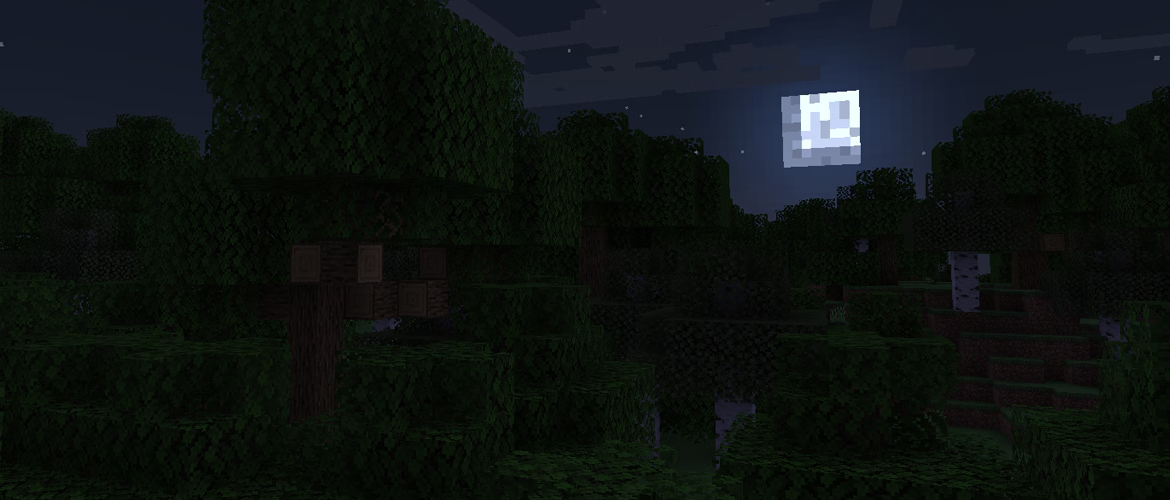
A Minecraft day gives only a short preparation window. The official first-night guide puts wood, simple tools, food, shelter and light ahead of distant exploration. Treat daylight as a budget: every detour that does not improve safety, food or tools consumes the same sunset.
Do not spend all your logs immediately. Keep enough raw material to make more planks, charcoal or emergency tools after the entrance is closed. A tiny finished shelter is more useful than a large roofless house when hostile mobs begin spawning in unlit areas.
- Wood and crafting table
- Stone pickaxe, axe and sword
- Food before a long mine
- Torches or sealed shelter
- Bed when wool is available
Make the base recoverable
A bed is not only a way to skip night. It creates a nearby respawn point when it remains valid, which reduces the cost of a mistake. Keep the path between spawn, bed, storage and mine entrance free of holes and obvious mob traps.
Store spare food, basic blocks, a stone tool set and a few torches in the base. If you die, recover with cheap equipment instead of carrying the second-best set into the same danger. The official spawning guide also warns that dropped items do not wait forever once their area is loaded.
Iron changes the risk model
The first useful iron is not automatically a full armor set. A shield, bucket, iron pickaxe and shears each unlock a different safety or progression tool. Choose from the actual problem in front of you: combat, lava and water control, ore access, or obtaining wool without killing sheep.
Build a staircase or controlled entrance rather than dropping into an open cave with no route back. Mark branches, close unsafe openings and return before food or inventory space becomes the new failure point.
A stable week beats a fragile sprint
By the end of the opening phase, the base should produce food, protect a bed and storage, and connect to a mine or explored route. This is the point to add animal pens, crop plots, furnaces and a dedicated valuables chest.
Only then expand toward villages, the Nether or distant biomes. Record coordinates if your edition shows them, carry a bed only when you understand the dimension risk, and leave a visible trail. Progress is measured by how cheaply you can repeat the trip, not by how far one lucky inventory travelled.
Official sources
Official daylight, shelter, light, food, bed and first-night survival guidance.
Mojang Studios · Checked Sep 12, 2026Official crafting grid, recipe book and early crafting explanation.
Mojang Studios · Checked Sep 12, 2026Official respawn, bed and dropped-item recovery boundaries.
Mojang Studios · Checked Sep 12, 2026