Direct answer
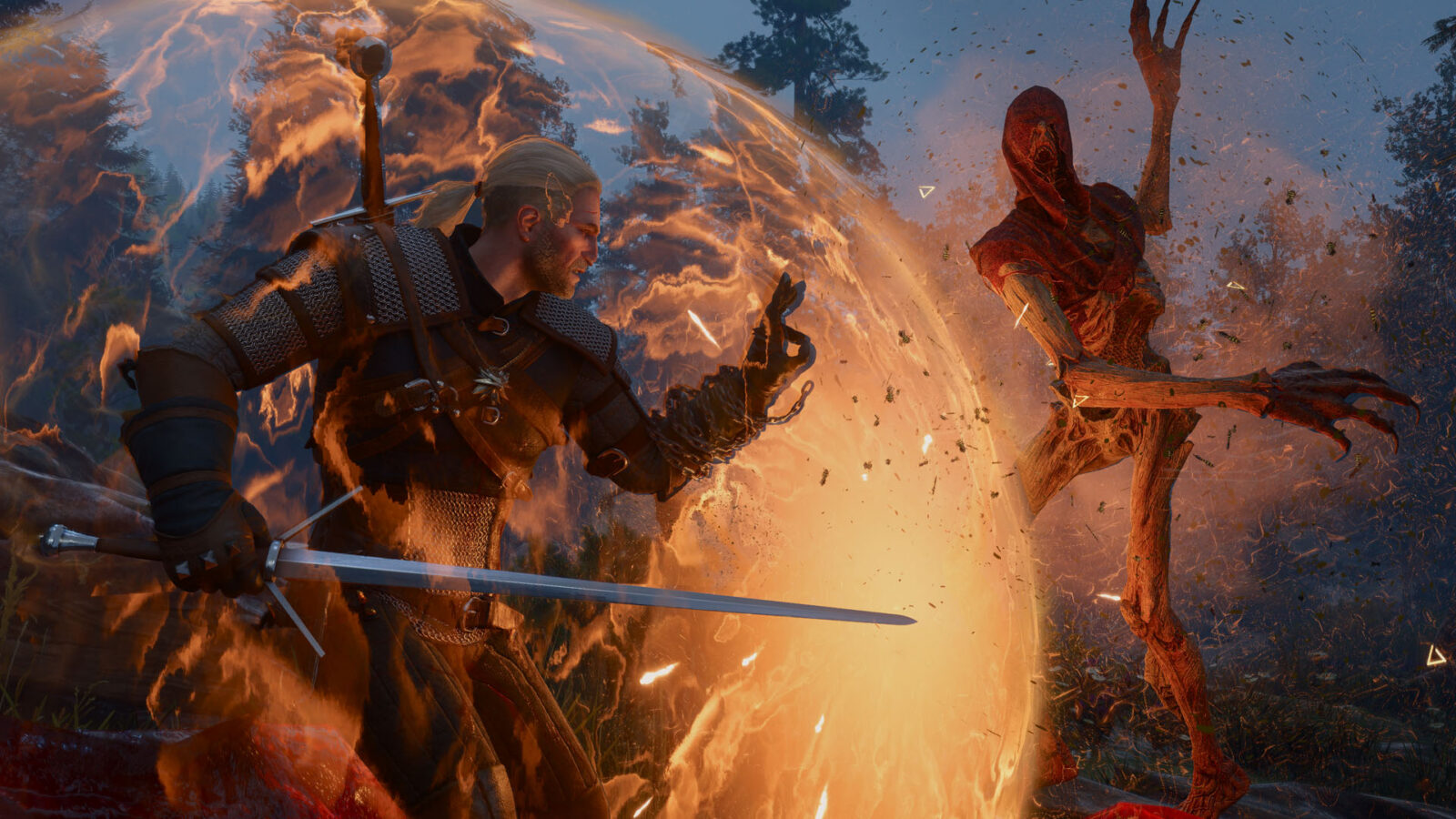
Prepare before contact: identify the enemy, use steel for humans and silver for monsters, select one Sign and a relevant quick item, then preserve stamina for the defensive action the fight actually needs.
Released-game guidance follows CD PROJEKT RED's official manual and support pages. Announced Remastered and Songs of the Past features stay labeled until their playable builds can be checked.
Quick route
- 01Open the Bestiary or identify the enemy before drawing a weapon.
- 02Use steel for humans and silver for monsters, following the official game description.
- 03Select a Sign and quick item before the first exchange.
- 04Use dodge for a short correction, roll for larger separation and parry only when the attack is readable.
- 05After a failed attempt, diagnose threat level, stamina, toxicity, durability and positioning in that order.
The preparation loop
CD PROJEKT RED describes witcher combat as preparation with elixirs, blade oils and two swords: silver for monsters and steel for humans. The official manual also exposes the Bestiary, quick-access item, Signs, bombs and potions as separate decisions.
That makes the reliable loop simple: identify, equip, select, then engage. Do not open with an improvised inventory search while the enemy is already attacking.
Movement and defense answer different problems
The manual separates dodge, roll, lock-on and parry or counterattack. Treat them as different answers: dodge corrects position, roll creates distance, lock-on stabilizes focus and parry requires a readable strike.
If an attack still reaches you after a dodge, the problem may be direction or distance rather than timing. If a roll leaves no stamina or safe follow-up, the response may be too large for the threat.
- Fast attack: pressure when the opening is short.
- Strong attack: commit only when the opening is clear.
- Dodge: preserve proximity while leaving the attack line.
- Roll: escape a larger danger or reset spacing.
- Parry or counterattack: use against an attack you can actually read.
Signs, adrenaline and toxicity
Stamina decreases when Signs are used, so repeated casting competes with movement. Adrenaline grows and falls during combat and increases damage output according to the manual. Potions raise toxicity, and a highlighted skull marks dangerous toxicity.
A useful preparation route leaves enough room for the next defensive decision. A potion or Sign is not preparation if it removes the resource needed to survive the opening exchange.
What Remastered changes—and what remains untested
CD PROJEKT RED has released improved combat, new finishers, revised animations, enhanced monster behavior, Sign effects and a reworked three-rank skill tree in Remastered. The studio says existing skill points are reset because of the skill-tree change.
This page does not invent new frame data, best skills or damage rankings from a change list. Rebuild prerequisites in the live skill screen and retest the stable preparation loop before treating an older build as current.
Official sources
Current game scope, live Remastered status, combat preparation, regions and expansions.
CD PROJEKT RED · Checked Sep 30, 2026Official controls, interface, stamina, adrenaline, toxicity, enemy threat colors, minimap and equipment durability.
CD PROJEKT RED · Checked Sep 30, 2026Official download index for platform-specific Witcher 3 manuals.
CD PROJEKT RED Support · Checked Sep 30, 2026Live availability, free-upgrade platform scope and included Hearts of Stone and Blood and Wine expansions.
CD PROJEKT RED · Checked Sep 30, 2026Official skill-tree reset, gameplay, accessibility, modding and platform-specific change list.
CD PROJEKT RED · Checked Sep 30, 2026