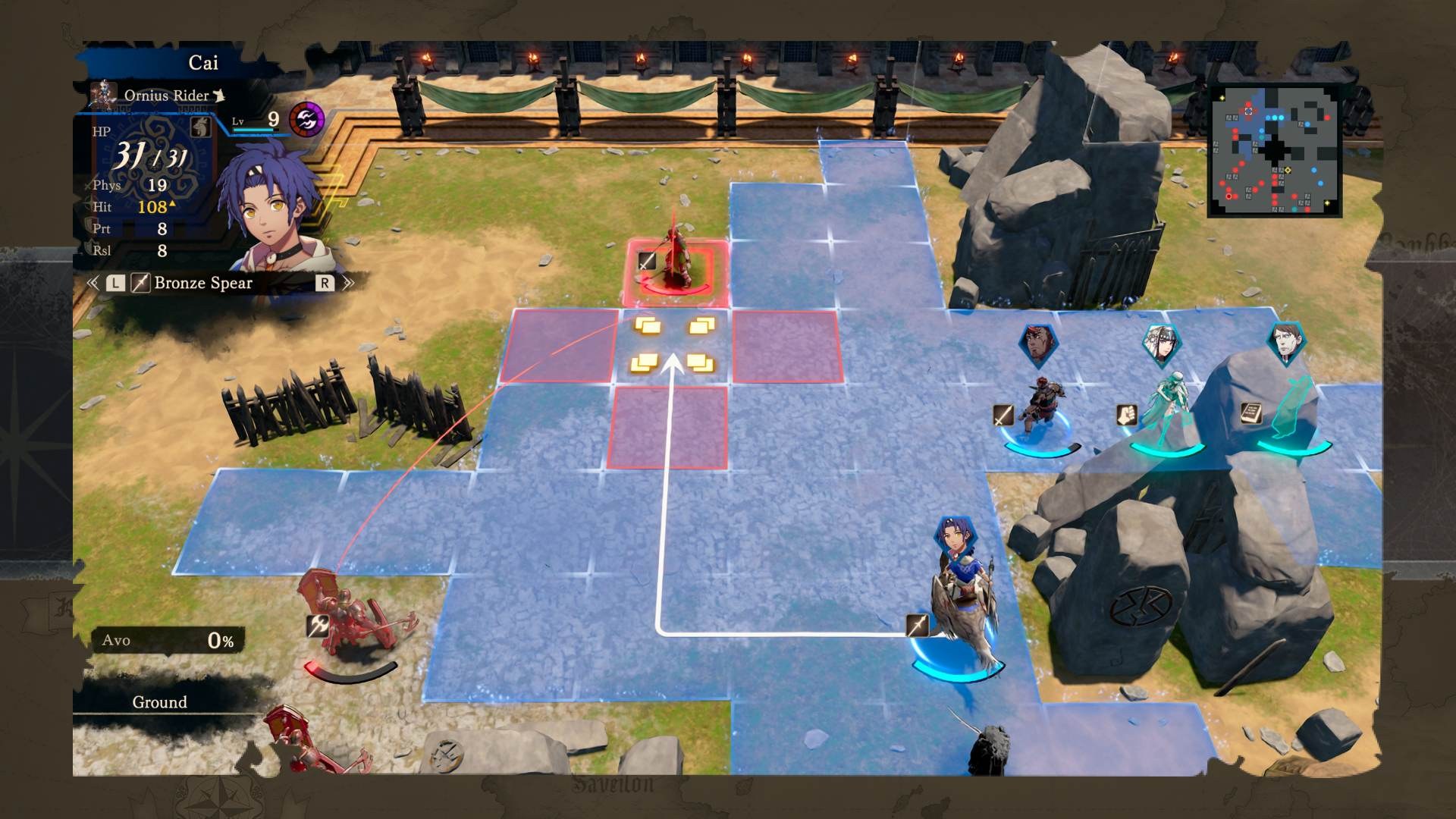
Direct answer
When a move exposes a unit or misses a critical matchup, rewind only far enough to change the decision that caused it. Recheck enemy reach, terrain, ally follow-up and Blaze Art risk before moving again. Nintendo confirms a limited number of rewinds, so treat each use as a diagnosis tool rather than permission to repeat an unchanged turn.
This guide describes published rules, not a fabricated complete route or optimized build. Check the released game for changing values and exact availability.
What to do
- 01Pause after the failure and identify the first wrong decision, not only the final hit.
- 02Rewind to the last point where movement, target or unit order can still change.
- 03Toggle enemy reach and compare the destination tile with ally coverage and terrain.
- 04Resolve safe setup actions first, then commit the exposed unit or Blaze Art.
- 05If the same failure returns, leave the map plan and change class, equipment or squad composition.
Rewind the cause, not the animation
Nintendo's launch guide says Fortune's Weave lets players rewind turns a limited number of times to try another strategy. The useful rewind point is the decision that created the danger: an exposed tile, the wrong attack order, an unprotected support unit or a Blaze Art that consumed too much HP.
Going back one action is enough only when that action caused the problem. If two earlier moves removed the escape route, rewind beyond them and rebuild the sequence.
Map reach before damage
The official overview stresses distance, attack reach, unit matchups and ally positions. Before repeating the turn, display enemy threat ranges and compare the destination with terrain, follow-up attacks and the next enemy phase.
Move units that create protection, healing or a safe lane before the high-risk attacker. A larger damage preview is not an improvement if it leaves the unit inside several unanswered ranges.
- Enemy reach and movement range
- Weapon or magic attack distance
- Terrain and escape tiles
- Ally follow-up, healing and protection
- Blaze Gauge and current HP
Change one tactical variable
A rewind is most informative when the next attempt changes one clear variable: the acting unit, target, tile or order. Repeating the same move and hoping for a different result spends a limited resource without learning.
If a matchup remains bad from every reachable tile, stop forcing it. Pull the unit back, use another damage type, or preserve the action for the following turn.
Know when the fix is outside the turn
If several rewinds reproduce the same collapse, the real issue may be class coverage, equipment, Blessings or underprepared recruits. Finish or withdraw according to the live map rules, then use Dagsion and the world map to repair the roster.
Nintendo does not publish an unlimited rewind promise or exact count for every difficulty in the checked article. Read the live counter and difficulty settings before spending the last use.